Unclogging Coastal & Regional Arteries: The $500M Highway 37 Project
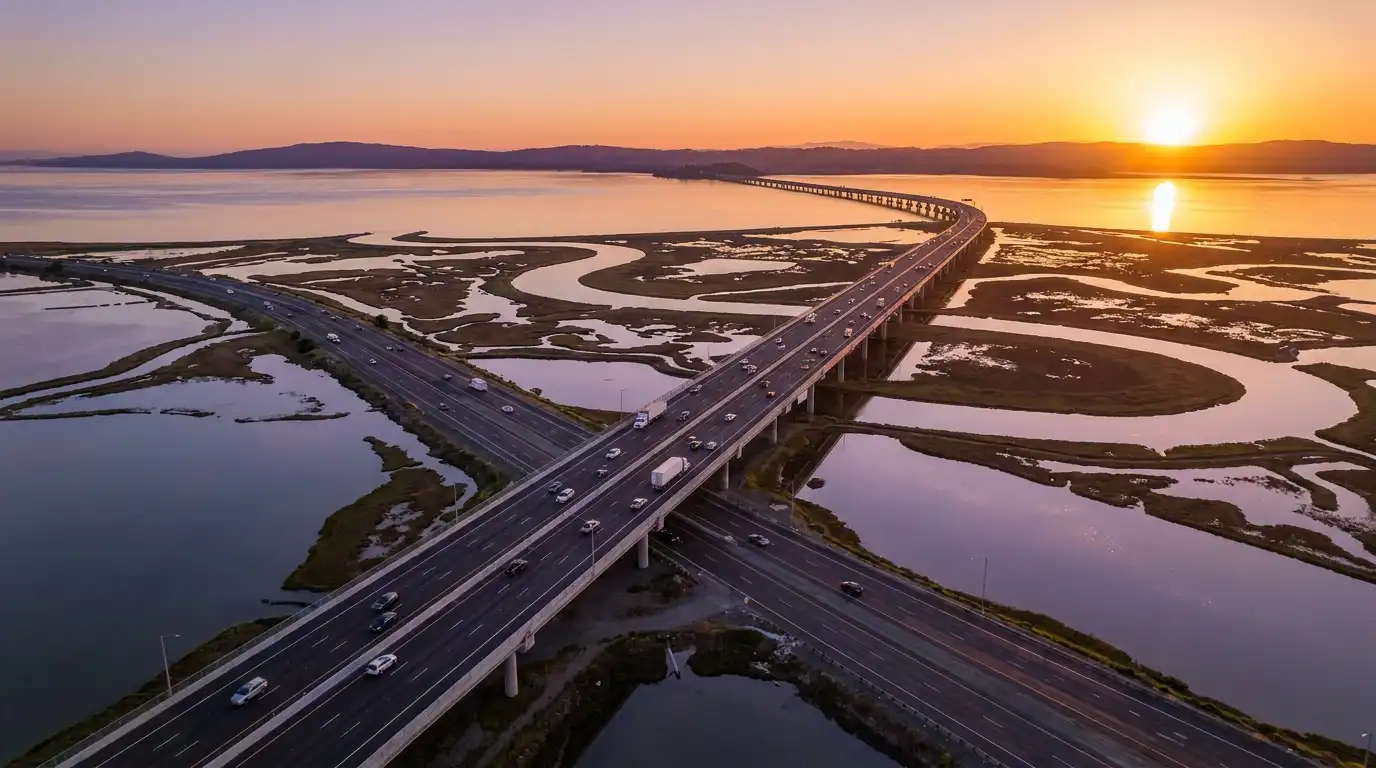
State Route 37 is a critical 21-mile corridor linking Vallejo and Solano County to Marin and Sonoma counties. Carrying approximately 40,000 commuters, visitors, and commercial vehicles every day, the route has historically been plagued by severe peak-hour congestion and seasonal marshland flooding. The 10-mile single-lane bottleneck between Sears Point and Mare Island has long acted as a drag on regional commerce.
With legislative momentum backed by Assembly Bill 697, the $500 million Highway 37 Improvement Project is stepping up to solve these longstanding issues. Key milestones transforming this stretch include:
- Lane Expansion & Merging Infrastructure: Widening the high-congestion 10-mile stretch from two lanes to four lanes (two in each direction), accompanied by a managed toll lane framework designed to ensure consistent travel speeds.
- Bridge Replacement & Climate Resilience: Rebuilding structural crossings like the Tolay Creek Bridge and restoring over three miles of degraded tidal salt marsh to protect the roadway against sea-level rise and extreme high-tide closures.
- Multimodal Transit Capabilities: Creating a predictable, reliable traffic flow that enables regional bus rapid transit connections between Vallejo, Novato, and Sonoma—offering commuters a viable alternative to single-occupancy vehicle travel.
Revolutionizing Bay Area Logistics: The $243M Cordelia Facility
While Highway 37 serves east-west traffic across the North Bay, Interstate 80 remains the dominant freight pipeline connecting California’s deep-water ports with national supply chains. At the heart of this corridor sits the Cordelia Commercial Vehicle Enforcement Facility near Fairfield.
For decades, the original inspection scales—constructed in 1958—struggled to handle modern freight volumes. Capable of inspecting only 500 to 700 trucks daily, queue spillbacks frequently forced inspectors to close the facility to prevent heavy transport trucks from backing up onto the active I-80 lanes.
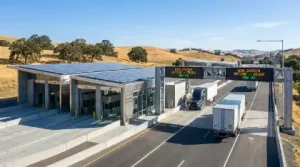
Construction on the replacement $243 million state-of-the-art facility marks a massive leap forward for California freight logistics. Relocated 0.7 miles east of its legacy site, the new facility introduces game-changing capabilities:
| Metric / Feature | Legacy Cordelia Facility (1958) | New Inspection Facility (Targeted 2029) |
|---|---|---|
| Daily Inspection Capacity | 500 to 700 trucks per day max | Up to 1,000 trucks per hour (24/7 operations) |
| Freeway Ramp Architecture | Short on/off ramps creating I-80 traffic queues | Braided ramp systems eliminating main-line I-80 backups |
| Inspection Technology | Static scales and limited manual inspection bays | 7 covered bays, weight-in-motion sensors, electronic sorting |
| Direct Highway Access | Restricted I-80 single access point | Dual direct connections from WB I-80 and WB State Route 12 |
Refining the Focus: Infill, Industrial Parks, & Municipal Growth
As transportation networks expand, Solano County’s economic development strategy is shifting away from controversial greenfield mega-developments toward high-value municipal infill and established commercial hubs. Recent decisions by county supervisors and municipal leaders highlight a commitment to protecting agricultural buffers while channeling capital into shovel-ready industrial parks.
This regional focus on orderly, planned development is yielding significant dividends across several key sector corridors:
1. Vacaville’s Biotechnology & Advanced Manufacturing Hub
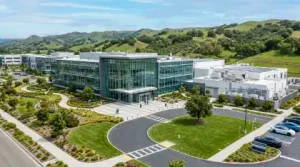
Vacaville continues to cement its status as a global leader in biomanufacturing. The city’s dedicated Biotechnology Business Park offers pre-zoned, infrastructure-ready acreage that attracts pharmaceutical giants and advanced manufacturing firms seeking proximity to UC Davis research talent without Bay Area real estate price tags.
2. Vallejo’s Commercial & Transit Realignment
At the western edge of the county, Vallejo is leveraging infrastructure projects like the $24.9 million State Route 37/Fairgrounds Drive Divergent Diamond Interchange (DDI)—the first interchange of its kind in the Bay Area. This project drastically reduces left-turn congestion near Six Flags Discovery Kingdom and directly supports the long-term vision for the Solano 360 redevelopment zone.
3. Fairfield & Suisun City Logistics Synergy
With immediate access to both I-80 and the newly upgraded Cordelia inspection interchange, Fairfield’s corporate parks are perfectly positioned to host clean distribution center footprints, cold-storage warehousing, and renewable energy technology suppliers.
Economic Outlook for Local Businesses & Real Estate
The convergence of freight efficiency, upgraded commuter highways, and focused municipal zoning creates a compelling investment thesis for Solano County. Reduced transit times between Vallejo and Fairfield make the region increasingly attractive to business operators seeking lower overhead costs while maintaining access to a skilled labor pool of over 440,000 residents.
Furthermore, regional planning partnerships monitored through the Solano Transportation Authority (STA) ensure that housing growth aligns with mobility improvements. As major projects move closer to completion over the next few years, local real estate markets stand to benefit from enhanced accessibility, reduced commute friction, and sustained commercial job creation.
Looking Ahead
Solano County is proving that infrastructure and economic development go hand-in-hand. By replacing aging 1950s transport bottlenecks with modern, high-capacity corridors and prioritizing smart municipal expansion, Solano is securing its position as one of Northern California’s premier destinations for living, working, and growing a business.