
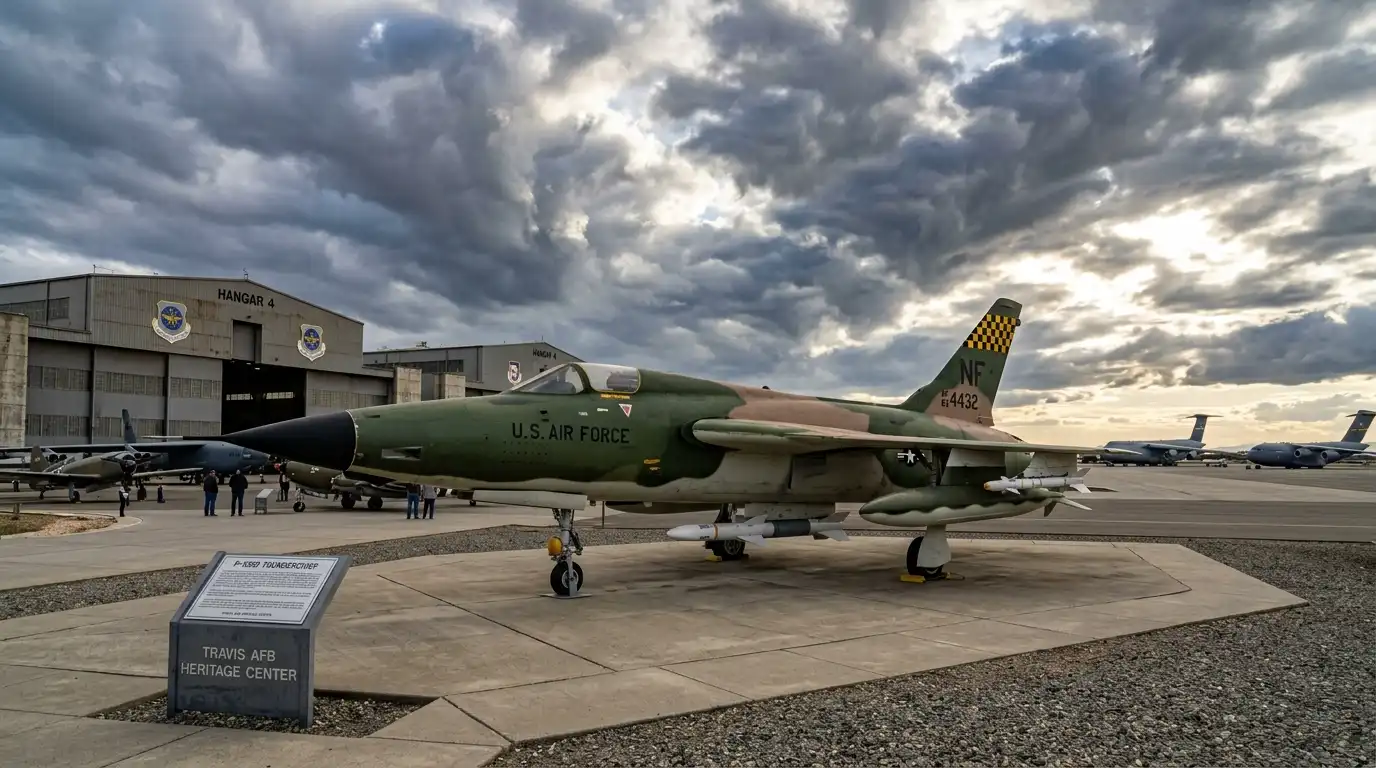
Situated on the eastern edge of Fairfield, California, Travis Air Force Base stands today as one of the world’s premier military air mobility hubs. Known globally as the “Gateway to the Pacific,” Travis AFB spans thousands of acres and serves as the operational heart for strategic airlift, aerial refueling, and aeromedical evacuation across the globe. However, long before modern heavy transport aircraft like the C-17 Globemaster III and C-5M Super Galaxy dominated its flight lines, the base played a pivotal, high-stakes role in defining America’s national defense strategy during the Cold War.
The transformation of Fairfield from a quiet, agricultural fruit-growing community into a bustling military stronghold is a story deeply rooted in mid-20th-century geopolitical conflict. In this historical deep dive, we explore the origins of Travis Air Force Base, its crucial strategic function during the Cold War, and how its growth permanently shaped the identity, economy, and community heritage of Fairfield and Solano County.
1. Wartime Origins: Fairfield-Suisun Army Air Base (1942–1948)
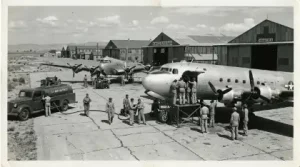 The story of military aviation in Solano County began shortly after the attack on Pearl Harbor in December 1941. Recognizing the urgent need to protect the U.S. West Coast and establish an air supply route across the Pacific Theater, the United States Department of War identified a vast stretch of open pastureland east of Fairfield for an airfield.
Officially authorized in September 1942, the installation was initially named Fairfield-Suisun Army Air Base. Operating under the Air Transport Command, the base quickly became a vital departure point for bombers, fighter aircraft, and cargo bound for Hawaii, Australia, and island garrisons throughout the South Pacific. By late 1943, thousands of airmen, repair mechanics, and logistics personnel were stationed on the base, establishing the foundation for Fairfield’s military identity.
Following the end of World War II, the base briefly shifted toward transport and weather reconnaissance missions. However, as geopolitical tensions escalated with the Soviet Union in the late 1940s, the strategic location of Fairfield made it an indispensable pillar for the newly formed United States Air Force.
2. Entering the Cold War & The SAC Era (1948–1958)
As the Iron Curtain descended across Europe, the base underwent a dramatic evolution. In 1948, control of Fairfield-Suisun Army Air Base was transferred to Strategic Air Command (SAC), the elite military organization tasked with maintaining America’s nuclear deterrence capability. Under the leadership of General Curtis LeMay, Fairfield became a prime strategic platform for long-range nuclear bombers.
In October 1950, the base was officially renamed Travis Air Force Base in honor of Brigadier General Robert F. Travis, who tragically died in a B-29 Superfortress crash on the base earlier that year. During General Travis’s tenure, the base was expanded to accommodate massive nuclear-capable bombers, including the B-29 Superfortress, the B-36 Peacemaker, and eventually the jet-powered B-52 Stratofortress.
Throughout the 1950s, Travis AFB served as a frontline shield in Cold War deterrence. Heavily guarded flight lines, alert facilities, and underground munitions storage facilities were constructed across the base. B-36 and B-52 bomber crews were placed on round-the-clock alert status, ready to launch within minutes of a nuclear warning order. The presence of these nuclear-capable assets elevated Fairfield from a regional air hub into a primary asset on global military mapping charts.
3. The Gateway to the Pacific: Airlift and Logistic Operations
While SAC bomber operations formed a vital shield during the peak Cold War years, the primary long-term identity of Travis Air Force Base emerged from its transport capabilities. In 1958, operational control of the base shifted from Strategic Air Command to the Military Air Transport Service (MATS), which later became the Military Airlift Command (MAC) and today’s Air Mobility Command (AMC).
Travis AFB quickly earned its enduring title—“Gateway to the Pacific.” During major Cold War conflicts and humanitarian crises, Travis operated as the primary staging ground for personnel and supplies heading westward:
- The Korean War (1950–1953): Travis served as the primary aerial embarkation port for thousands of American service members and tens of thousands of tons of critical military cargo bound for the Korean peninsula.
- The Vietnam War (1955–1975): During the height of American involvement in Southeast Asia, Travis AFB was the busiest military air terminal in the world. C-124 Globemaster, C-133 Cargomaster, and C-141 Starlifter cargo planes departed day and night carrying troops and equipment to Vietnam, returning with wounded service members for care at David Grant USAF Medical Center.
- Operation Babylift (1975): Near the conclusion of the Vietnam War, Travis AFB served as the primary entry point for thousands of Vietnamese orphans brought to the United States for adoption.
4. How Travis AFB Shaped Fairfield’s Community and Landscape
The explosive expansion of Travis Air Force Base during the Cold War had a profound and permanent impact on the city of Fairfield and the surrounding Solano County region. In the early 1940s, Fairfield was a small agricultural town with fewer than 1,500 residents. By 1960, propelled by military construction, service member families, and civilian contractor jobs, Fairfield’s population surged past 15,000—a tenfold increase in just two decades.
This rapid growth altered Fairfield’s physical urban footprint in several major ways:
- Suburban Housing Expansion: To house thousands of military families, master-planned housing developments, schools, and commercial shopping centers were constructed across central and eastern Fairfield throughout the 1950s and 1960s.
- Infrastructure and Transportation: Regional roads, highway connections to Interstate 80, and utility networks were modernized and expanded to support the logistical demands of the air base.
- Economic Resilience: Travis AFB became Solano County’s largest single employer, creating thousands of civilian jobs in maintenance, construction, logistics, and healthcare while insulating the local economy from regional economic downturns.
- Cultural Diversity: Military families stationed at Travis brought diverse cultures, backgrounds, and perspectives from across the world, fostering a rich, multicultural community identity that defines Fairfield to this day.
5. Preserving the Legacy: The Travis AFB Heritage Center
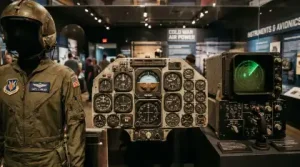
Today, the Cold War history of Travis Air Force Base is carefully preserved for future generations at the Travis Air Force Base Heritage Center (formerly the Jimmy Doolittle Air & Space Museum). Located directly on base, this world-class aviation museum features one of the largest collections of historic military aircraft on the West Coast.
Visitors can explore restored aircraft that defined the Cold War era, including historic cargo haulers, fighter jets, trainer aircraft, and the massive B-52 Stratofortress. The center serves as an inspiring educational resource, connecting modern residents with the courageous aviators, ground crews, and community leaders who built Fairfield’s aviation legacy.
Conclusion: An Enduring Cold War Legacy
From its humble beginnings as an emergency wartime airfield in 1942 to its standing as a cornerstone of strategic air mobility today, Travis Air Force Base has played an irreplaceable role in modern American military history. The base’s Cold War journey not only shaped national defense strategies across the Pacific, but it also transformed Fairfield into a vibrant, globally connected city.
As Travis AFB continues to support international operations and humanitarian relief missions around the globe, its rich Cold War history remains a proud badge of honor for the Fairfield community and all of Solano County.